Explore component library tools through the product profiles below. The collection groups applications around a shared task. Product scope can overlap, so compare the specific workflow each tool describes rather than the category name alone.
✳
How to compare component library tools
Identify the files, text or account connections your task needs. Confirm that the product accepts those inputs and offers controls for reviewing its work.
Test one representative task and inspect the result for accuracy and completeness. Record where manual corrections or extra tools are needed.
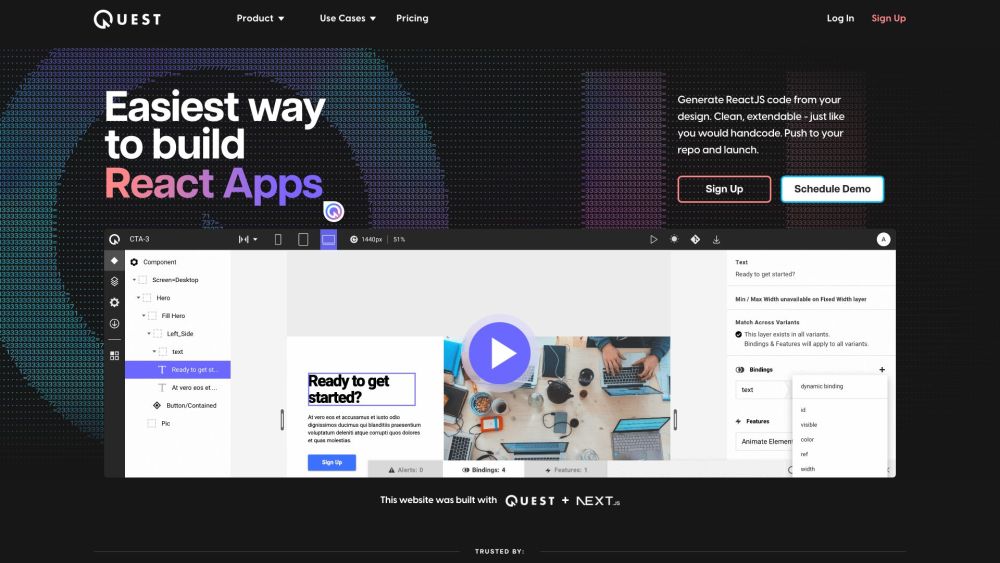
Quest is a platform that allows users to generate React components and clean code from their Figma designs. It simplifies the process of building React apps by automatically converting designs into code that is extendable and follows industry standards. With built-in support for Material-UI (MUI) and Chakra UI, Quest makes it easy to create beautiful animations and responsive, multi-screen experiences without the need to write a line of code.
FAQ
Component Library questions and answers
Practical answers to help you take the next step.
What does the Component Library tag cover?
The collection groups applications around a shared task. Product scope can overlap, so compare the specific workflow each tool describes rather than the category name alone.
Which inputs should I compare in component library tools?
Identify the files, text or account connections your task needs. Confirm that the product accepts those inputs and offers controls for reviewing its work.
How should I review results from a Component Library tool?
Test one representative task and inspect the result for accuracy and completeness. Record where manual corrections or extra tools are needed.
What is a fair first test for component library tools?
Choose one task with a clear success condition. Keep the input consistent, record the time spent reviewing and compare the complete workflow cost.
What does Quest offer in this Component Library collection?
Quest is a platform that allows users to generate React components and clean code from their Figma designs. It simplifies the process of building React apps by automatically converting designs into code that is extendable and follows industry standards. With built-in support for Material-UI (MUI) and Chakra UI, Quest makes it easy to create beautiful animations and responsive, multi-screen experiences without the need to write a line of code.
Which export details matter when choosing component library tools?
Check export formats, integrations and whether you can keep using your work outside the service. Test a real export before committing to a longer plan.
How can I compare the cost of component library tools?
Run the same small task in each shortlisted product. Compare the price per usable result, usage limits, regeneration costs and time spent correcting the output. Confirm current terms with the provider.
What should I check before sharing files with a Component Library provider?
Check who can access uploaded material, how long it is retained and how deletion works. Use a non-confidential test file while evaluating a product.
Does every product tagged Component Library solve the same problem?
No. The Component Library label groups related applications, but each product description defines its actual scope. Compare the input and output for your specific task.
Where can I confirm a Component Library product’s current features?
Open the product profile, follow its official website link and review its documentation or plan comparison. Directory descriptions and screenshots may predate product changes.