What is Psynth AI?
Psynth AI is an artificial intelligence platform designed to help mental health professionals create psychological reports and assessment summaries more efficiently. The system converts test scores, interview information, intake forms, behavioral observations, and other clinical documentation into a structured report draft that clinicians can review and refine. By reducing the amount of time spent organizing information and composing repetitive sections, Psynth AI helps psychologists focus more attention on interpretation, treatment planning, and patient care.
Built for psychological assessment workflows, Psynth AI supports more than 250 assessment instruments across cognitive, personality, behavioral, neuropsychological, and diagnostic categories. Its technology combines automated document analysis with established clinical reporting practices to produce clear, consistent, and professionally organized reports. Each report remains under the control of the qualified clinician, who can evaluate the findings, add professional context, and make final decisions about diagnostic language and recommendations.
How to Use Psynth AI
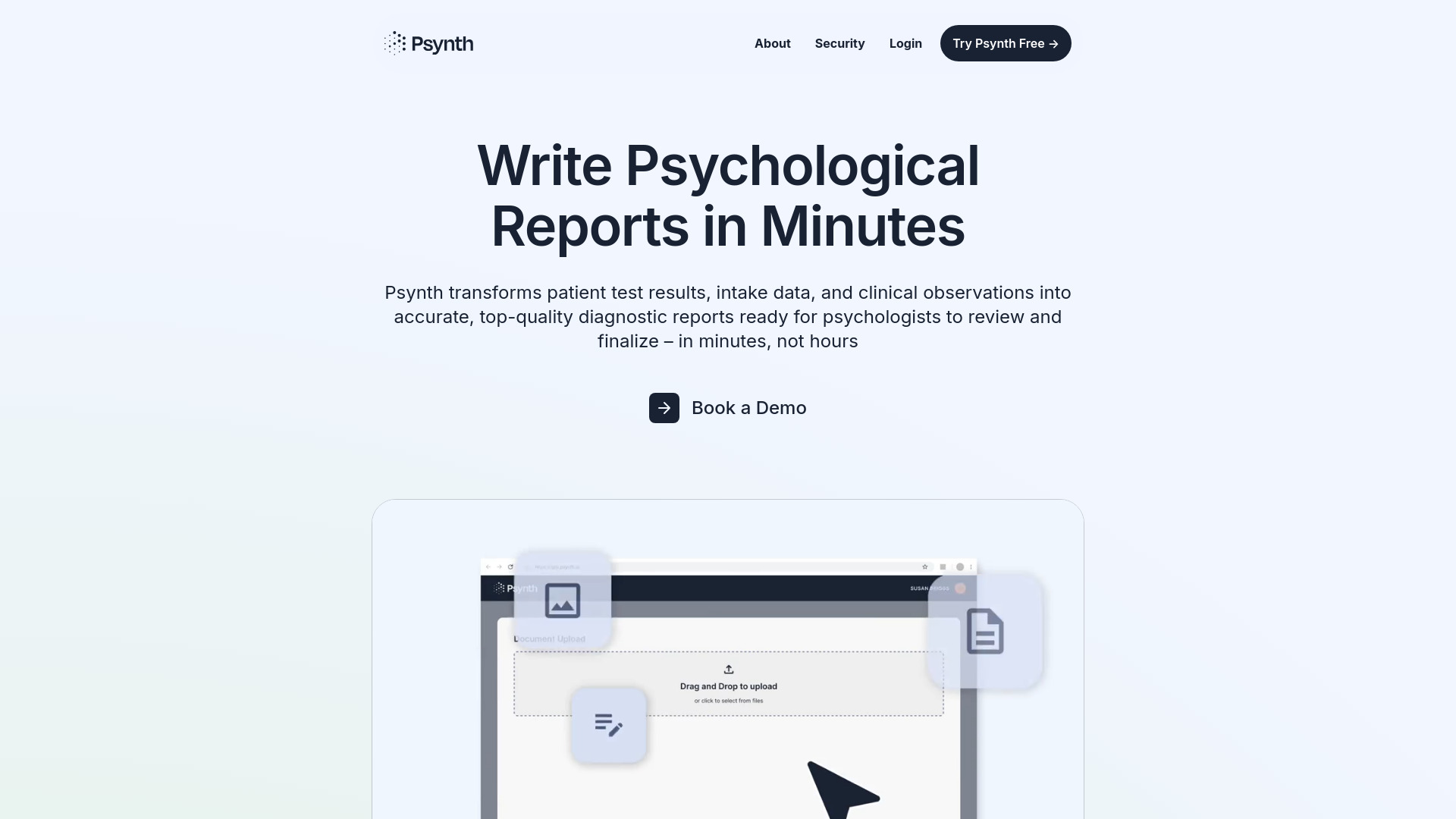
Psynth AI simplifies the process of turning scattered assessment materials into a usable report draft. Begin by uploading relevant test results, clinical notes, intake records, interview summaries, and supporting documents. The platform can work with common file formats such as PDFs and image files, including scanned paperwork. It analyzes the uploaded material, identifies important details, and organizes the information into appropriate report sections without requiring clinicians to manually retype every result.
After processing the source materials, Psynth AI generates a draft containing the assessment information, observed patterns, score summaries, and other relevant content. Clinicians can then examine the draft, verify the extracted data, and revise the wording to reflect their professional interpretation. AI-assisted editing tools can help expand, shorten, or clarify selected sections, while manual editing gives practitioners full control over the final language and structure.
When the report is complete, users can apply their preferred formatting and export the finished document in PDF or Word format. This workflow supports a consistent reporting process from initial document collection through final delivery to patients, families, schools, or referring providers.
Key Features of Psynth AI
- Automated Psychological Report Drafting: Transforms assessment information and clinical documentation into organized report drafts that follow familiar psychological reporting structures and support efficient review.
- Multi-Format File Analysis: Processes information from PDFs, scanned documents, images, and other commonly used file types, helping reduce repetitive transcription and manual document preparation.
- Extensive Assessment Compatibility: Covers more than 250 psychological assessments across cognitive, personality, behavioral, neuropsychological, and diagnostic areas to support a wide range of clinical services.
- Structured Data Organization: Arranges scores, observations, background information, and relevant findings into logical sections so clinicians can locate important details more easily during report development.
- Clinical Review Support: Highlights possible inconsistencies, unusual patterns, or areas requiring additional attention so professionals can investigate the information before approving the final report.
- Editable AI Assistance: Allows users to revise report content with natural-language prompts, adjust the tone and level of detail, and tailor explanations to the individual patient and referral question.
- Flexible Templates and Formatting: Supports consistent presentation through customizable report structures, formatting controls, and export options suitable for professional documentation.
- Privacy-Focused Infrastructure: Uses security practices designed for sensitive healthcare information, including HIPAA-oriented protections and a zero-retention approach for patient data.
Why Choose Psynth AI?
Psychological assessment reports often require extensive documentation, careful score interpretation, and detailed written explanations. Even experienced clinicians can spend several hours assembling a single report, especially when information is distributed across testing platforms, handwritten notes, intake forms, and interview records. Psynth AI addresses this administrative workload by helping practitioners move from raw documentation to an editable report draft in a shorter period.
The platform is designed around the needs of psychological professionals rather than general-purpose document creation. It recognizes the kinds of information used in assessment workflows and provides a framework for presenting findings in a coherent format. This can help practices improve consistency across reports while allowing each clinician to preserve their own judgment, terminology, and communication style.
Psynth AI can also help practices manage growing demand for evaluations. By reducing time spent on formatting, transcription, and repetitive report language, clinicians may be able to complete more assessments within their existing schedules. The resulting time can support direct patient work, case consultation, feedback sessions, and more thorough clinical review.
Use Cases and Applications
Clinical psychologists can use Psynth AI when preparing evaluations for attention-related concerns, learning difficulties, autism-related referrals, emotional and behavioral conditions, and broader neuropsychological questions. The platform can organize information from multiple assessment sources and create a starting point for reports that describe the referral question, methods, results, clinical impressions, and recommendations.
School psychologists can apply the platform to educational evaluations, eligibility documentation, student support planning, and other high-volume reporting responsibilities. Faster report preparation can help schools communicate findings to families and educational teams more promptly while preserving time for student observation, consultation, and intervention planning.
Private practices and specialty assessment clinics can use Psynth AI to improve their internal reporting workflows as referral volume increases. Standardized templates and automated organization can support collaboration among practitioners, reduce duplicated administrative effort, and make it easier to maintain a consistent quality of documentation across different types of evaluations.
Forensic, rehabilitation, and hospital-based psychology teams may also benefit from a centralized approach to organizing assessment materials. In each setting, the clinician remains responsible for reviewing the source information, evaluating the accuracy of the generated content, and approving the conclusions presented in the final report.