What Is Gaslighting Check?
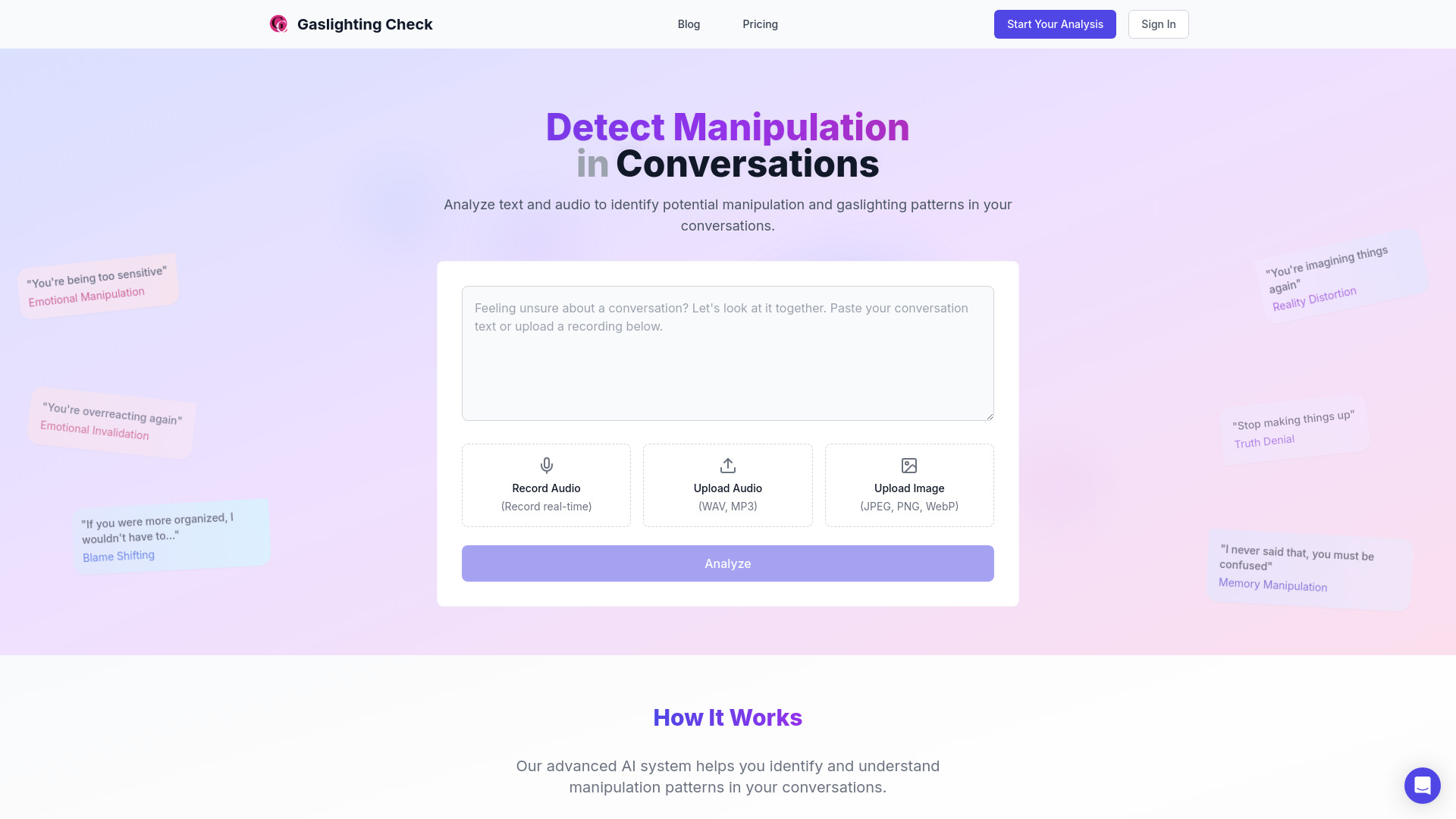
Gaslighting Check is an AI-powered text and audio analysis tool that helps users recognize potential emotional manipulation in conversations. It examines communication for patterns associated with gaslighting, such as repeated denial, dismissal of feelings, blame shifting, and attempts to undermine someone’s recollection of events. Designed for personal and professional situations, the platform offers another perspective when an exchange leaves you confused or questioning your judgment. Its findings can support reflection and help you prepare for a discussion with someone you trust. AI-generated analysis should be considered alongside the broader relationship context, since a conversation alone cannot establish a person’s intentions.
How to Use Gaslighting Check
Start by submitting the conversation you want to examine. Depending on the available input options, you can paste written exchanges or upload text and audio content. Messages, emails, and recorded discussions can provide material for reviewing how people communicate. Gaslighting Check then analyzes the submission and produces a report identifying language or interaction patterns that may deserve closer attention. Read the highlighted passages together with their explanations, and consider whether the interpretation fits what happened before and after the exchange. The AI coach can help you explore the findings and consider possible responses.
For ongoing concerns, conversation history features can help you review whether similar communication patterns appear across multiple interactions. Reports may also help organize questions for a therapist, counselor, or workplace support contact. Access to saved history, extended analysis, and coaching may depend on your subscription. Before uploading sensitive material, review the current privacy settings and remove identifying details that are unnecessary for understanding the conversation.
Key Features of Gaslighting Check
- AI Text and Audio Analysis: Review written conversations and audio recordings for potential signs of emotional manipulation. Support for both formats helps users examine exchanges that take place through messages, email, or spoken discussions.
- Recognition of Potential Gaslighting Patterns: The tool looks for communication behaviors associated with gaslighting, including dismissing another person’s experience, denying earlier statements, shifting responsibility, and repeatedly questioning someone’s memory. Explanations help users understand why a passage was flagged.
- Readable Conversation Reports: Analysis results bring relevant excerpts and supporting observations together in an accessible format. Users can revisit difficult exchanges, compare interpretations, and identify topics they may want to discuss with a qualified professional.
- Support for Different Relationship Contexts: Gaslighting Check can help users reflect on conversations involving partners, relatives, friends, managers, or colleagues. Relationship context matters, and users should consider power dynamics, previous interactions, and the circumstances surrounding each exchange.
- Privacy and Data Controls: The platform describes encryption and automatic deletion among its privacy measures. Check the current policy for details about storage, retention, saved reports, and uploaded recordings so you understand how your information is handled.
Together, these features provide a structured way to examine unsettling conversations. Their value lies in helping users notice recurring concerns, put questions into words, and prepare for informed discussions. Results offer a starting point for reflection, with accuracy depending on the available content and context.
Why Choose Gaslighting Check?
Manipulative communication can be difficult to recognize when you are directly involved. You may remember feeling unsettled without knowing which words or responses contributed to that feeling. Gaslighting Check helps organize an exchange into passages and explanations that you can review at your own pace. Its combination of text analysis, audio support, and conversational guidance makes it useful for people who want help examining communication patterns. By connecting observations to specific excerpts, the platform gives users something concrete to consider when deciding how to respond.
The tool can also support preparation for conversations about boundaries, recurring disagreements, or workplace concerns. Reviewing several exchanges may reveal repetition that is less apparent in a single message. However, AI can misread sarcasm, miss cultural context, or interpret an incomplete exchange incorrectly. Treat findings as prompts for further consideration rather than definitive judgments about a relationship. When a situation involves significant distress or safety concerns, support from a qualified professional or trusted person can provide context and practical help beyond automated analysis.
Use Cases and Applications
In personal relationships, Gaslighting Check can help users revisit exchanges that involve repeated dismissal, contradictory accounts, or pressure to accept blame. Someone preparing for a counseling session might use a report to identify examples they want to discuss and explain why those moments felt troubling. Reviewing conversations over time may also help clarify whether an issue reflects an isolated disagreement or a recurring pattern. Any conclusions should account for the full exchange, including the user’s own contributions and circumstances that may be missing from the submission.
At work, users can examine emails, chat messages, or meeting recordings for communication patterns that create confusion or undermine confidence. The analysis may help organize concerns before speaking with a manager, HR representative, or adviser. Reports can serve as discussion aids, but they do not independently establish harassment, misconduct, or legal liability. Preserve original communications if documentation matters, follow applicable workplace policies, and confirm that you have permission to share or upload recordings containing other people’s information.