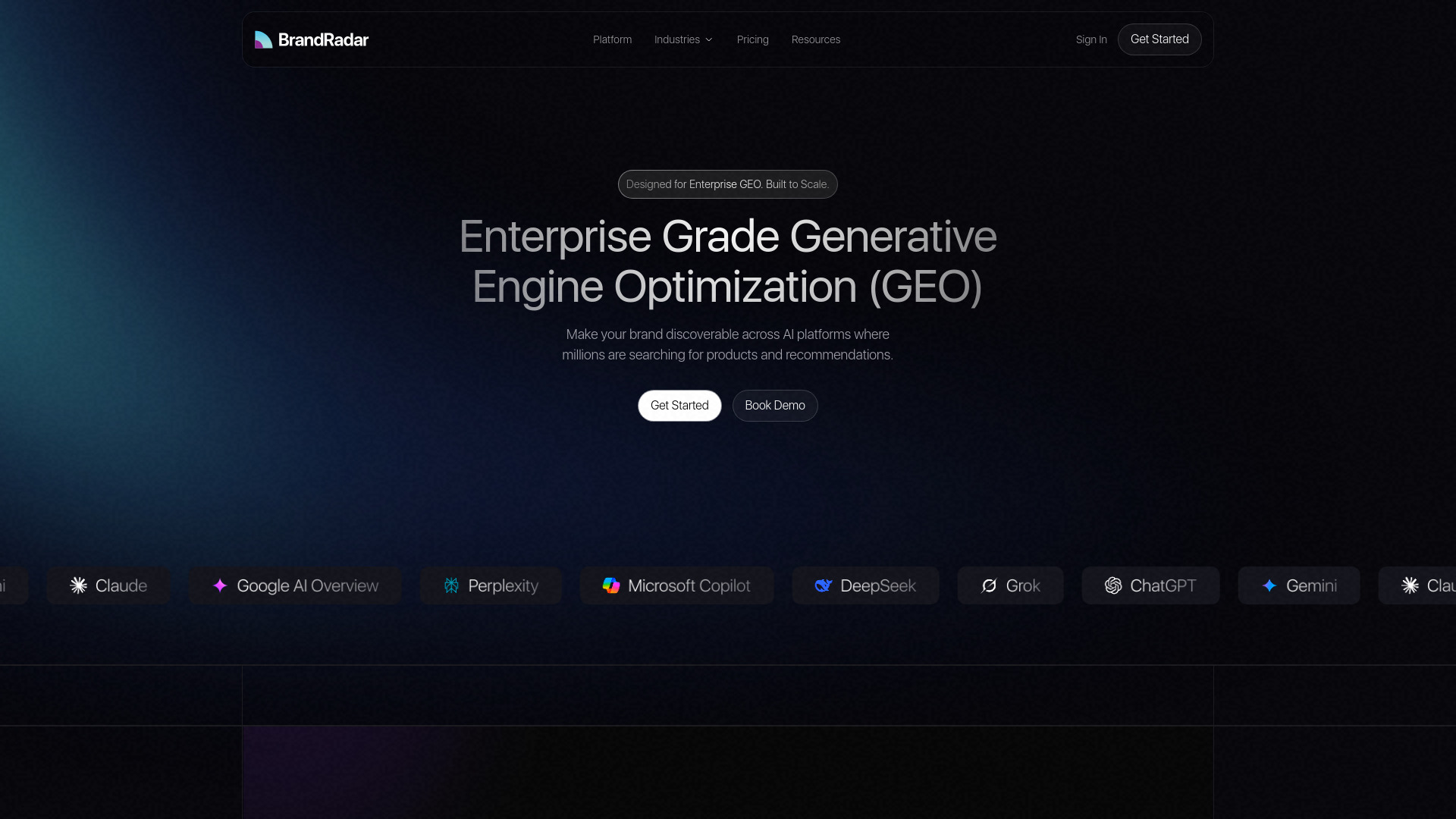
What is BrandRadar?
BrandRadar is an AI visibility and Generative Engine Optimization (GEO) platform that helps businesses understand how their brands appear in AI-generated answers. As consumers increasingly turn to AI assistants for research, product comparisons, and recommendations, visibility extends beyond traditional search rankings. BrandRadar brings brand mentions, citations, sentiment, and competitor performance into one dashboard, giving marketing teams a clearer view of their presence across generative search experiences.
The platform monitors responses from services such as ChatGPT, Claude, Perplexity, Gemini, and other AI-powered discovery tools. By examining when a brand appears, how it is described, and which sources are referenced, BrandRadar helps teams identify opportunities to strengthen their content and positioning. Its GEO tools connect visibility measurement with practical content planning, supporting a more informed approach to AI-driven discovery.
How to Use BrandRadar
Begin by setting up your brand in the BrandRadar dashboard and identifying the competitors, topics, and keyword phrases that matter to your business. The platform uses prompt-based analysis to explore how AI systems respond to relevant questions. These responses reveal whether your brand is mentioned, how prominently it appears, and whether the surrounding language presents it positively, negatively, or neutrally.
Review the Visibility Scoring System to establish a baseline for your AI presence. Compare results across monitored platforms to spot differences in brand recognition and recommendations. A brand may appear frequently in one AI assistant while receiving limited attention in another, making platform-level analysis useful for prioritizing improvements.
Next, explore citation mapping to see which websites and publications are referenced alongside relevant brand mentions. Combine those findings with sentiment analysis and competitor comparisons to identify content gaps or unclear messaging. Use BrandRadar’s content generation capabilities to develop material informed by these insights, then monitor subsequent responses to evaluate changes over time.
Key Features of BrandRadar
- Multi-Platform AI Visibility Tracking: Follow brand mentions across AI services such as ChatGPT, Claude, Perplexity, Gemini, Grok, DeepSeek, Microsoft Copilot, and Google’s generative search experiences. Compare how different systems introduce, describe, and recommend your brand.
- Visibility Scoring System: Assess your AI presence through metrics that consider mention frequency, prominence, and contextual relevance. Use a consistent measurement framework to establish benchmarks and track changes across monitored responses.
- Citation and Source Mapping: Discover the articles, websites, and other referenced materials associated with AI answers about your market. Identify sources worth reviewing for content improvements, outreach, or further research.
- Competitive Benchmarking: Compare your brand with competing businesses across visibility, sentiment, and positioning. Find the topics where competitors receive attention and investigate opportunities to build a stronger presence.
- Brand Sentiment Analysis: Examine the tone of AI-generated descriptions to understand how your business is portrayed. Surface unfavorable narratives, inconsistent messaging, and positive associations that can inform reputation and content strategies.
- AI-Assisted Content Creation: Turn visibility findings into content ideas and drafts. Use citation patterns, relevant keyword phrases, and competitive gaps to guide materials that explain your brand, products, and expertise more clearly.
Why Choose BrandRadar?
BrandRadar addresses a growing challenge for digital marketers: understanding brand exposure when users receive a synthesized answer instead of a conventional list of search results. Traditional SEO metrics remain valuable, but they do not provide a complete picture of how an AI assistant presents a business. BrandRadar adds this perspective by combining response monitoring, sentiment insights, citation analysis, and competitor comparisons.
Its unified workflow helps teams move from scattered checks to a more structured monitoring process. Rather than testing a few questions manually, marketers can examine patterns across a broader collection of prompts and platforms. This makes it easier to identify recurring issues, prioritize relevant topics, and distinguish isolated responses from more persistent visibility trends.
For businesses developing a GEO strategy, BrandRadar provides a connection between research and execution. Teams can use its findings to refine product explanations, address unanswered customer questions, and plan content around relevant subjects. Although no platform can guarantee inclusion in AI-generated answers, systematic monitoring supports better-informed decisions about where to focus optimization efforts.
Use Cases and Applications
Marketing teams use BrandRadar to understand whether their brands appear in AI answers related to important products, services, and customer needs. By comparing mentions across relevant prompts, they can identify subjects that deserve additional content coverage and evaluate how their messaging is represented.
E-commerce businesses can investigate how AI assistants discuss their products alongside competing alternatives. Competitive benchmarking helps reveal differences in recommendation frequency and positioning, while citation analysis highlights the sources referenced in those comparisons.
Brand managers can use sentiment monitoring to flag unfavorable descriptions or inconsistent claims for further review. Content strategists can examine citation patterns and keyword phrases to plan useful resources, such as product guides, comparison pages, and answers to common questions. Agencies can also apply these insights when reporting on clients’ AI visibility and developing GEO recommendations that complement existing SEO programs.