Text&ampWriting

ValueSense

Get hedge fund-quality stock analysis with ValueSense. Screen stocks with AI, explore 5,000+ metrics and 20+ years of data, and calculate intrinsic value.

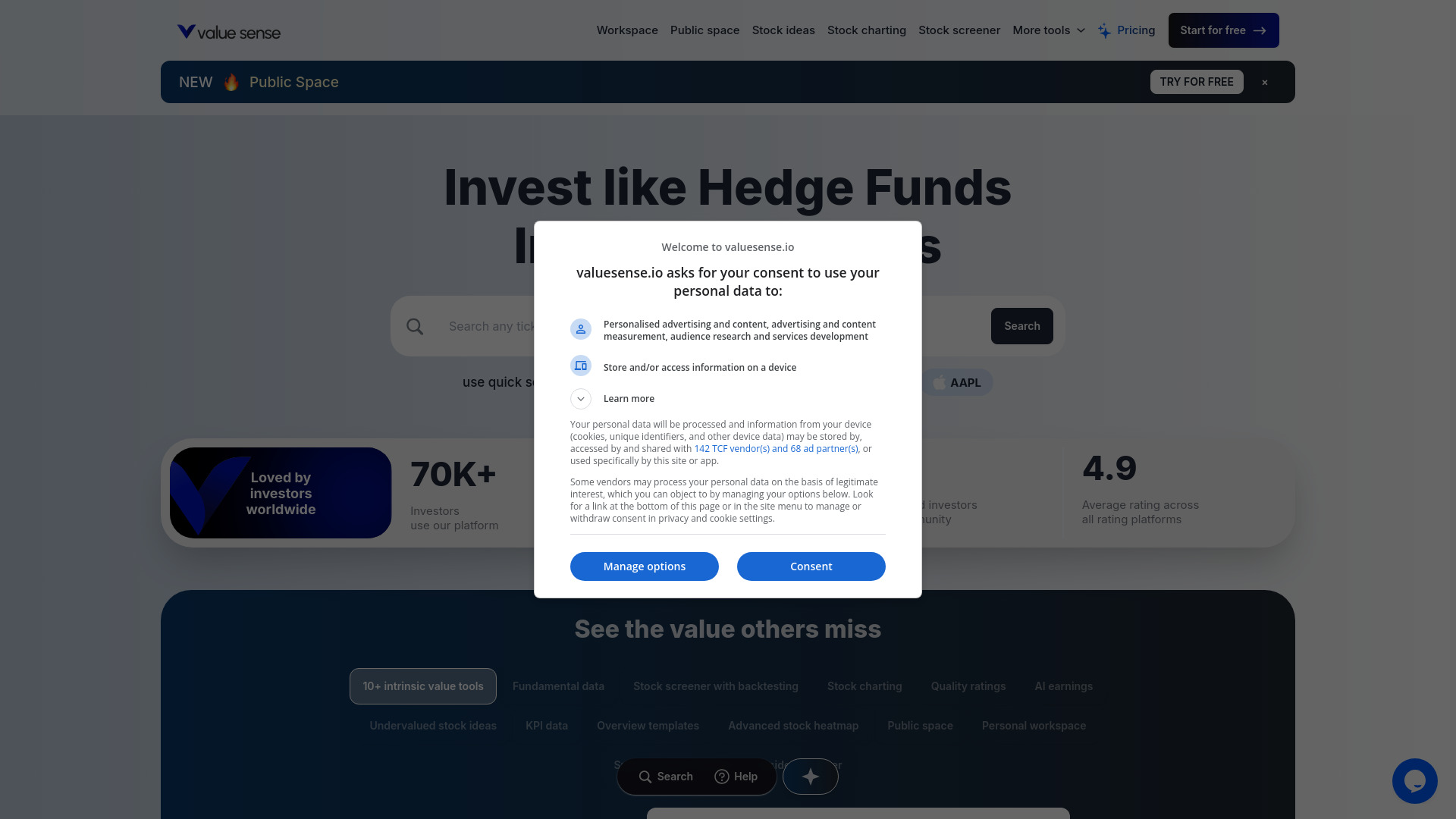
ValueSense website preview

What Is ValueSense?

ValueSense is an investment research platform that brings AI stock screening and intrinsic value analysis into one workspace. Individual investors can screen companies using more than 5,000 metrics, compare estimates from multiple valuation models, and explore over 20 years of historical market data. The screener helps you build a shortlist around a specific investment thesis. From there, you can open a company's financial statements, review its operating history, and examine the assumptions that would need to hold for its current share price to make sense.

How to Use ValueSense for Stock Research

Start with an investment question and turn it into a set of screening rules. If you're looking for profitable companies with manageable debt, for example, you could combine filters for operating margin, leverage, and cash flow. Save the screen so you can revisit the same criteria as new financial results come in. For companies that pass, open a valuation model to test your assumptions about future growth, profitability, or dividends. You can then add promising candidates to a watchlist and save your research in a workspace.

Use the charting tools to see how a company's financial performance developed over time and compare it with movements in the stock price. If you maintain your own financial models, export data to Excel for additional calculations and scenario analysis. The public community also offers a place to review stock ideas and screening approaches shared by other investors.

Key Features of ValueSense

  • AI stock screener. Run unlimited screens using a library of more than 5,000 metrics. Combine criteria for growth, profitability, financial health, and valuation to narrow a large universe of stocks to companies worth researching in more detail.
  • Intrinsic value calculators. Use more than 10 valuation calculators, including discounted cash flow, dividend discount, and comparable-company analysis. Looking at several estimates helps you see how the choice of method and its assumptions affect the result.
  • Historical data and interactive charts. Explore more than 20 years of market history alongside company-specific performance indicators. Financial statements, earnings call transcripts, and management presentations provide context when a chart shows a change worth investigating.
  • Insider and institutional activity. Follow reported insider trades, hedge fund positions, and portfolios of prominent investors. Use customizable workspaces to organize watchlists, revisit company research, and keep track of ideas that need further investigation.

These features support a repeatable research process. You can apply the same filters to a new set of companies, use consistent assumptions when comparing businesses, and return to saved ideas when a company reports earnings or its share price changes.

Why Choose ValueSense?

ValueSense connects the initial stock screen with the work that follows. A low valuation multiple might put a company on your shortlist, for example. Reviewing its cash flow history, margins, and recent earnings commentary can help you assess why the market assigns that multiple and decide which assumptions to use in your valuation. Having those tools in one workspace reduces the time spent gathering figures and supporting documents from separate sources.

The platform also accommodates different research routines. An investor who follows a small group of companies can keep saved screens and watchlists close at hand, while someone building detailed forecasts can export the underlying data to Excel. Technical charts and ownership disclosures add context when price trends or changes in reported positions are relevant to the investment thesis.

Who Can Use ValueSense?

Value investors can screen for stocks with low valuation multiples, then estimate what those businesses could be worth under different cash flow assumptions. Growth investors can compare revenue trends and operating margins to see whether rising sales are translating into stronger profitability. Quantitative researchers can export metrics to Excel for custom scoring models, while momentum traders can pair price charts with fundamental filters to refine their watchlists.

Equity researchers can use earnings call transcripts, investor presentations, and SEC filings to investigate changes in company results. Insider transactions and reported fund holdings can suggest further questions to explore. Investors who prefer to discuss their research can share ideas in the public community and compare how others interpret the same data. ValueSense is also featured on aitop-tools.com.

Product source: ValueSense official website. Check the provider for current plans, limits and availability.

FAQ

ValueSense questions and answers

Product context and practical checks for evaluating ValueSense.

What is ValueSense used for?

Get hedge fund-quality stock analysis with ValueSense. Screen stocks with AI, explore 5,000+ metrics and 20+ years of data, and calculate intrinsic value.

How do I get started with ValueSense?

Start with an investment question and turn it into a set of screening rules. If you're looking for profitable companies with manageable debt, for example, you could combine filters for operating margin, leverage, and cash flow. Save the screen so you can revisit the same criteria as new financial results come in. For companies that pass, open a valuation model to test your assumptions about future growth, profitability, or dividends. You can then add promising candidates to a watchlist and save your research in a workspace.Use the charting tools to see how a company's financial performance developed over time and compare it with movements in the stock price. If you maintain your own financial models, export data to Excel for additional calculations and scenario analysis. The public community also offers a place to review stock ideas and screening approaches shared by other investors.

Which capabilities are described for ValueSense?

AI stock screener. Run unlimited screens using a library of more than 5,000 metrics. Combine criteria for growth, profitability, financial health, and valuation to narrow a large universe of stocks to companies worth researching in more detail. Intrinsic value calculators. Use more than 10 valuation calculators, including discounted cash flow, dividend discount, and comparable-company analysis. Looking at several estimates helps you see how the choice of method and its assumptions affect the result. Historical data and interactive charts. Explore more than 20 years of market history alongside company-specific performance indicators. Financial statements, earnings call transcripts, and management presentations provide context when a chart shows a change worth investigating. Insider and institutional activity. Follow reported insider trades, hedge fund positions, and portfolios of prominent investors. Use customizable workspaces to organize watchlists, revisit company research, and keep track of ideas that need further investigation. These features support a repeatable research process. You can apply the same filters to a new set of companies, use consistent assumptions when comparing businesses, and return to saved ideas when a company reports earnings or its share price changes.

What projects can I evaluate ValueSense for?

Value investors can screen for stocks with low valuation multiples, then estimate what those businesses could be worth under different cash flow assumptions. Growth investors can compare revenue trends and operating margins to see whether rising sales are translating into stronger profitability. Quantitative researchers can export metrics to Excel for custom scoring models, while momentum traders can pair price charts with fundamental filters to refine their watchlists.Equity researchers can use earnings call transcripts, investor presentations, and SEC filings to investigate changes in company results. Insider transactions and reported fund holdings can suggest further questions to explore. Investors who prefer to discuss their research can share ideas in the public community and compare how others interpret the same data. ValueSense is also featured on aitop-tools.com.

How does ValueSense handle ai stock screener.?

AI stock screener. Run unlimited screens using a library of more than 5,000 metrics. Combine criteria for growth, profitability, financial health, and valuation to narrow a large universe of stocks to companies worth researching in more detail.

How does ValueSense handle intrinsic value calculators.?

Intrinsic value calculators. Use more than 10 valuation calculators, including discounted cash flow, dividend discount, and comparable-company analysis. Looking at several estimates helps you see how the choice of method and its assumptions affect the result.

What should I compare before choosing a ValueSense plan?

Check ValueSense’s current pricing page for included usage, renewal terms and any credit charges. Compare the cost of a usable result, including retries, rather than assuming that account registration includes free usage.

What inputs should I prepare for a ValueSense trial?

Check supported documents, datasets and source access. Establish whether the product can inspect your actual material rather than answer from general knowledge.

How can I check the quality of a ValueSense result?

Follow citations to the original source, recalculate important numbers and check the date and scope of the evidence. Distinguish an explanation from a verified result.

Where is the official ValueSense website?

The website linked from this profile is https://valuesense.io. Use the provider’s own documentation, account area and support channels to confirm current product details.

Visit ValueSense