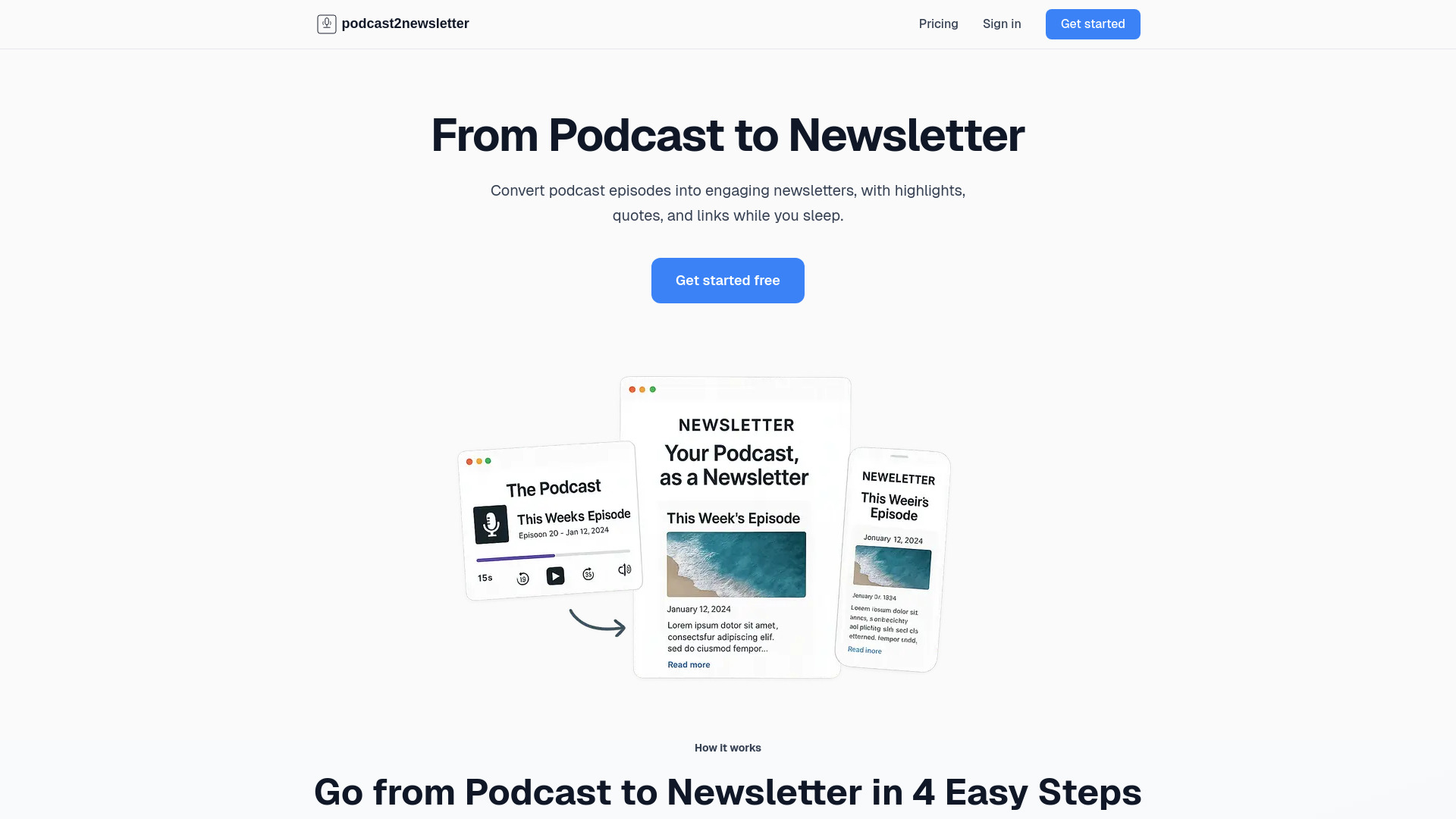
What Is Podcast 2 Newsletter?
Podcast 2 Newsletter is an AI transcription and newsletter maker that helps creators turn spoken content into readable email updates. Instead of transcribing an episode and writing a newsletter from scratch, podcasters can use the platform to produce a structured draft based on their existing recordings. Its purpose is straightforward: make valuable podcast conversations accessible to subscribers who prefer a quick read or want a written recap after listening.
By combining speech-to-text processing with AI-assisted content organization, Podcast 2 Newsletter helps identify the main ideas, notable moments, and useful takeaways within an episode. These elements can then become the foundation of an email newsletter that reflects the original discussion. For independent creators, marketing teams, and businesses, this approach simplifies content repurposing while creating another way to connect with an audience. A single recording can support both an audio release and a complementary written update, helping creators get more value from the work they have already completed.
How to Use Podcast 2 Newsletter
Begin by providing the content you want to repurpose. Depending on the input options available in your account, you can upload a supported audio or video file or connect a podcast RSS feed. The platform processes the recording, generates a transcript, and uses the episode’s content to prepare a newsletter draft. Rather than presenting an unedited transcript, the newsletter workflow focuses on organizing the discussion into sections that are easier to scan and read.
Once the draft is available, review its headline, summary, featured points, and any selected quotations. This step is important for checking names, technical terminology, speaker attribution, and the meaning of statements taken from a longer conversation. You can then adapt the copy to your brand’s style and add a suitable introduction or call to action. Use the available export or copying options to move the finished newsletter into your email marketing workflow. If RSS-based automation is supported by your plan, check its settings to understand how new episodes are detected and processed.
Key Features of Podcast 2 Newsletter
- AI Podcast-to-Newsletter Creation: Transform recorded discussions into newsletter drafts without starting from a blank page. The AI-assisted workflow helps turn conversational material into a written format built around the episode’s central themes, giving creators a practical starting point for their next email campaign.
- Speech-to-Text Transcription: Create a text version of your recording to support newsletter development and editorial review. A transcript makes it easier to revisit important passages, check terminology, and locate ideas that deserve attention in the final newsletter. Results should be reviewed, especially when recordings contain background noise or overlapping speakers.
- Highlights and Takeaway Organization: Bring the most relevant parts of an episode into focus. Content analysis can help surface discussion points, potential quotations, and useful lessons, reducing the effort required to sort through a full recording. Creators can refine those selections to match their audience’s interests.
- Structured Newsletter Formatting: Build an email around clear headings, concise summaries, and readable sections instead of sending subscribers a lengthy transcript. An organized draft helps readers understand the subject quickly and decide which ideas they want to explore further by listening to the episode.
- Workflow and Export Options: Move generated content into your publishing process using the options offered by the platform. File uploads, RSS-based inputs, and export tools can simplify different stages of production, although supported formats, automation settings, and integrations should be checked against current product documentation.
Together, these capabilities help reduce repetitive production tasks and make regular newsletter publishing more manageable. The strongest results come from combining AI-generated drafts with a final human review that checks accuracy, strengthens the writing, and preserves the creator’s perspective.
Why Choose Podcast 2 Newsletter?
Producing a podcast already involves planning, recording, editing, and promotion. Adding a newsletter can introduce another substantial writing task, particularly for creators publishing frequently. Podcast 2 Newsletter addresses that challenge by using the episode itself as the source material for an email draft. Instead of developing a separate piece of content from the beginning, creators can build on ideas they have already researched and discussed.
The podcast-to-newsletter approach also serves readers differently from a conventional transcript. A transcript follows the recording word by word, while a newsletter can prioritize the most useful insights and present them in a more concise order. This distinction matters for subscribers who want the substance of an episode but do not have time to listen immediately. A well-edited newsletter can provide a helpful overview while encouraging readers to return to the full conversation.
For teams maintaining a consistent publishing schedule, the tool can provide a repeatable production process. Creators retain responsibility for the final message, while AI assists with transcription and draft preparation. That balance makes Podcast 2 Newsletter worth considering for anyone seeking a more efficient way to connect podcast publishing with email marketing.
Use Cases and Applications
Independent podcasters can use Podcast 2 Newsletter to create episode recaps that keep their email subscribers informed between releases. A newsletter can introduce the latest topic, explain why it matters, and highlight a few ideas worth remembering. This provides an additional touchpoint without requiring an entirely separate editorial concept for every email.
Interview-based shows can turn guest conversations into focused written summaries that showcase practical advice and interesting perspectives. After verifying quotations and attribution, hosts can use those insights to encourage discussion or direct readers toward the complete interview. Business podcasts can follow a similar approach, translating industry conversations into informative updates for customers, prospects, and professional communities.
Educators and subject-matter experts can adapt instructional episodes into written recaps that reinforce important concepts. News and commentary creators can produce concise overviews of the issues covered in each recording, with appropriate fact-checking before publication. Even narrative podcasts can use newsletters to introduce themes, recap developments, or offer context around an episode. Across these applications, the aim is to complement the listening experience with useful written content rather than replace the original recording.