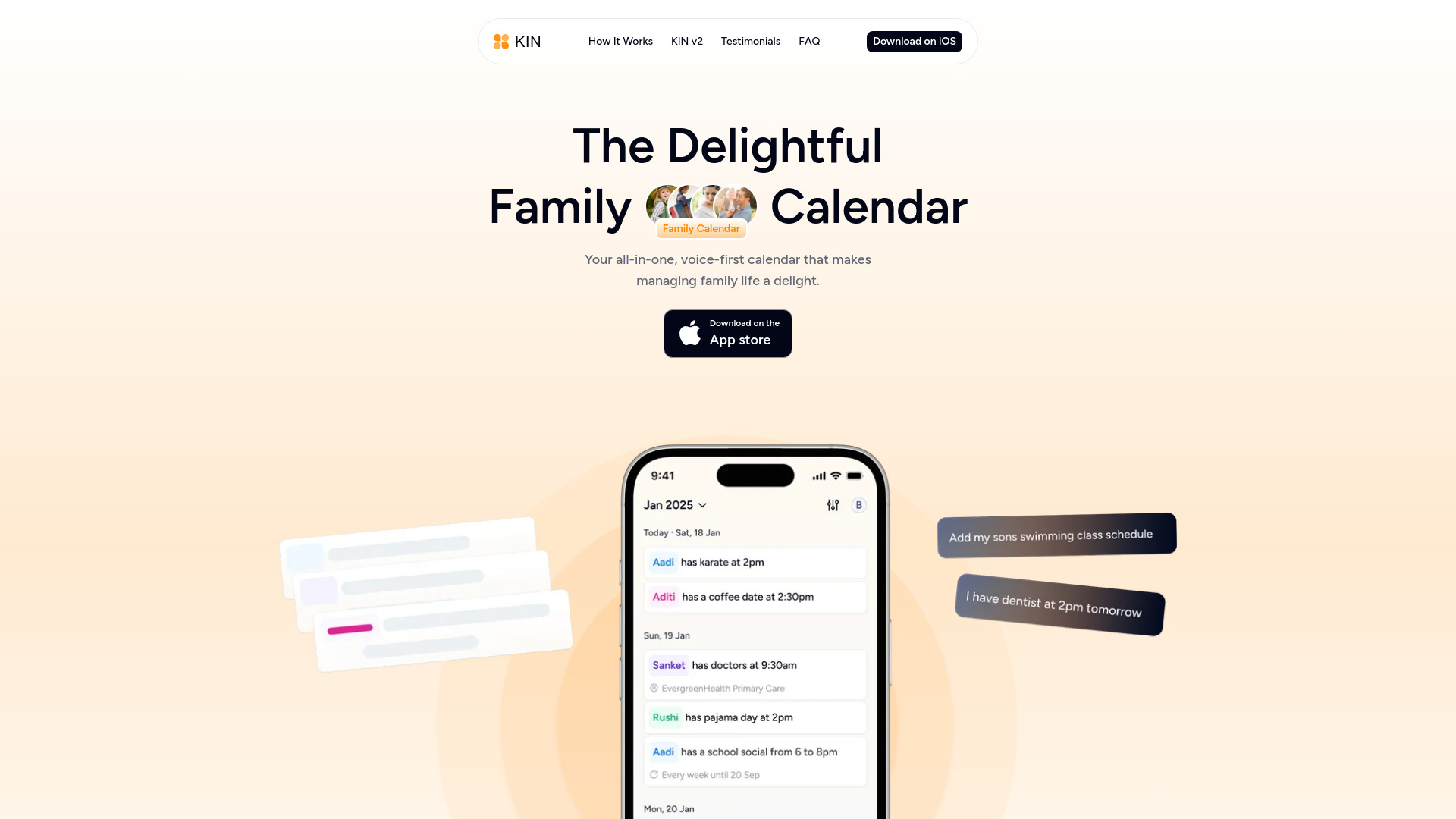
What Is KIN?
KIN is an AI-powered family calendar that helps busy households organize events, appointments, and everyday activities through voice commands, typed instructions, and photos. Built around the way families share plans, it brings scattered schedules into one shared calendar. Instead of entering every detail by hand, you can describe an upcoming activity or photograph a printed schedule to turn that information into calendar entries. From school meetings and sports practices to medical appointments and weekend outings, KIN makes family scheduling easier to manage.
The app combines a voice-first interface with scheduling automation to reduce repetitive calendar work. Its shared view gives family members a common place to check plans and follow updates, helping parents and children stay informed without relying on separate calendars or repeated messages.
How to Use KIN
Begin by setting up a family group and inviting the people who need access to your household calendar. Once everyone has joined, you can start adding activities using whichever input method suits the moment. Press and hold the voice button, then explain what you want to schedule in everyday language. For example, say, “Add Emma’s swimming lesson every Thursday at 5 PM.” KIN interprets the request and creates the event. If speaking is inconvenient, you can type the details instead.
When plans change, press and hold an existing event and describe the update. You can use voice instructions to adjust the time, change event details, or update attendees without working through multiple fields. For paper-based information, photograph an appointment card, school timetable, or activity flyer. KIN reads the image and uses the event details it identifies to create calendar entries. Review those details before relying on them, particularly if the photo contains small text, unclear dates, or a complicated layout.
Key Features of KIN
- AI Voice Scheduling: Add and manage family events by speaking naturally. KIN interprets conversational requests, making it easier to capture plans without typing every field individually.
- Photo-to-Calendar Conversion: Turn images of school notices, appointment cards, and event flyers into digital calendar entries. This feature reduces the effort involved in transferring information from paper to your family calendar.
- Shared Household Calendar: Give family members a central place to view upcoming activities and contribute updates. Shared visibility helps everyone understand the household schedule and spot potential overlaps.
- Event Reminders: Receive reminders for important commitments, including lessons, healthcare visits, school activities, and sports events, so upcoming plans are easier to keep track of.
- Recurring Event Setup: Create repeat activities with a simple instruction. Weekly practices, regular appointments, and other ongoing commitments can be scheduled without entering each occurrence separately.
- Voice-Based Event Updates: Revise existing plans by describing the changes you need. Updates appear in the shared calendar, helping family members stay aware as arrangements evolve.
Why Choose KIN?
Family scheduling often means collecting information from conversations, printed notices, messages, and separate calendars. KIN brings those planning tasks together with voice input and photo recognition. Rather than treating every new activity as another manual data-entry task, it lets you capture information in the form you already have—whether that is a spoken reminder or a paper handout.
This approach is useful for households coordinating several people’s routines. Parents can add activities while handling other responsibilities, recurring events require less repetitive setup, and a shared calendar gives everyone a clearer view of what is coming next. KIN can also support coordination between caregivers or across households by keeping plans in a common location. Its main appeal is practical: less time maintaining schedules and an easier way to keep family commitments organized.
Use Cases and Applications
KIN can help families organize the many activities that compete for space in a typical week. Households with children in different schools or extracurricular programs can use it to track practices, performances, parent meetings, and changing appointment times. A printed sports schedule or school event notice can become a starting point for calendar entries instead of another document waiting to be typed up.
Parents and caregivers can also use the shared calendar to coordinate pickup arrangements, note important commitments, and check whether activities overlap. For co-parenting families or relatives helping with childcare, shared access provides a practical reference for upcoming plans. Working parents can bring family obligations into a clearer view alongside their other commitments, while recurring scheduling helps keep regular lessons and appointments organized. Whether the goal is managing a packed school term or remembering a single dental visit, KIN offers several ways to capture and share the details.