What is Genie 3?
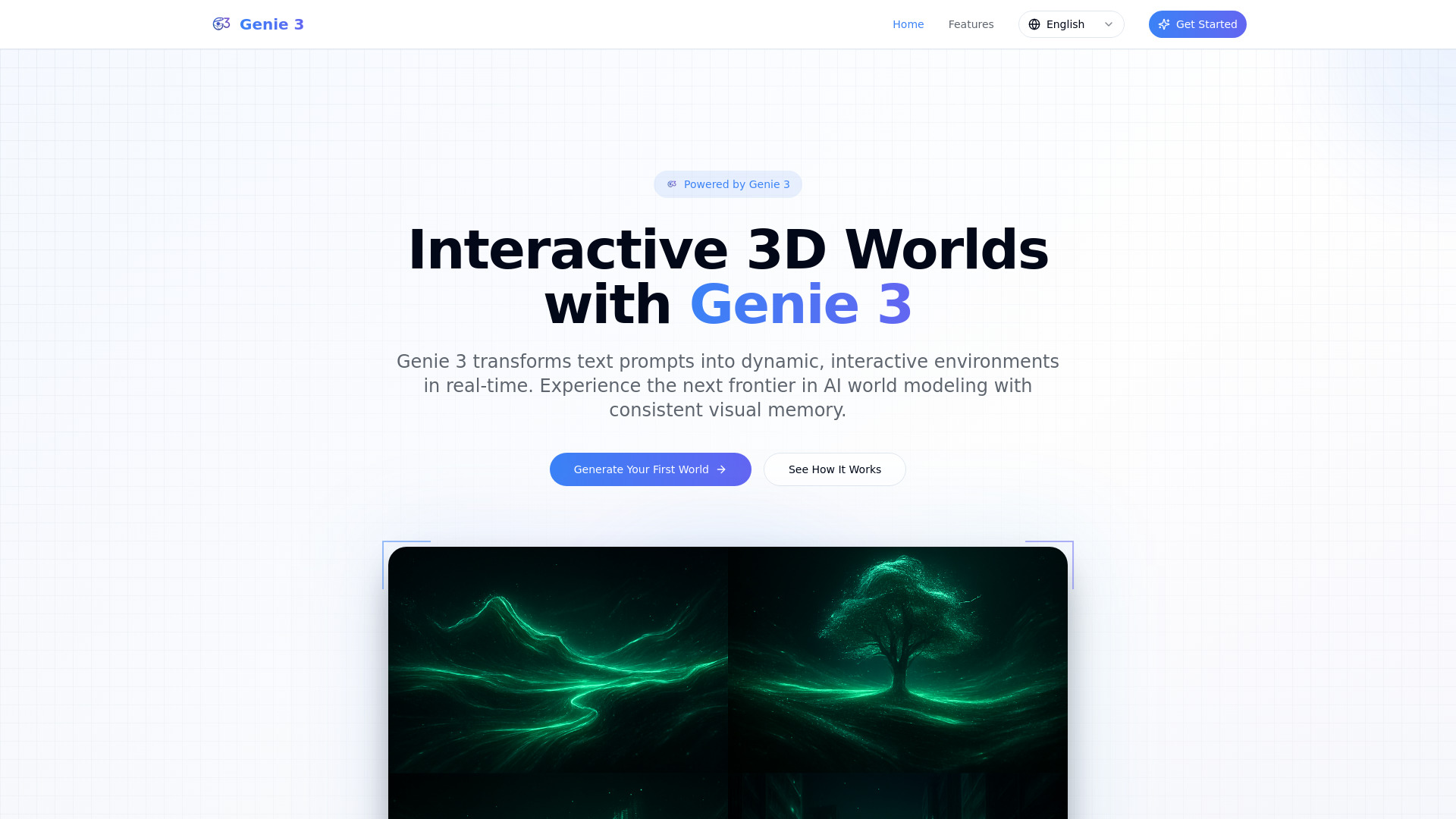
Genie 3 is an AI world model from Google DeepMind that turns written descriptions into interactive environments. Instead of producing only a fixed sequence of images, it generates a world that responds as a user moves through it. With real-time visual generation at 24 frames per second, Genie 3 explores a new direction for AI content creation: spaces that people and AI agents can navigate, observe, and influence.
For creators interested in an AI 3D world builder and video generation technology, Genie 3 offers a way to explore scenes, develop visual ideas, and experiment with interactive storytelling. Its generated environments can resemble three-dimensional spaces, with changing perspectives, lighting, movement, and environmental behavior. However, generating a navigable visual world is different from exporting an editable 3D model or producing a finished video. Understanding this distinction helps creators identify where Genie 3 fits into their workflows.
How to Use Genie 3
The creative process begins with a text description of the environment you want to explore. A useful prompt establishes the setting, visual style, lighting, and important objects. For example, you might describe a quiet coastal village at sunrise, a futuristic research facility, or a forest path after rainfall. When access is available, Genie 3 uses this description to create an interactive scene that develops as the user navigates it. Available controls and access conditions depend on the version or interface being offered.
Once inside a generated environment, users can explore different viewpoints and observe how the scene responds to movement and interaction. Promptable world events provide another way to guide the experience by introducing changes through text instructions. This supports an iterative workflow: establish a setting, explore its possibilities, and test modifications. Creators planning professional video projects should separately confirm recording, export, editing, and audio capabilities, since real-time world generation does not automatically include a complete video production suite.
Key Features of Genie 3
- Interactive World Generation at 24 FPS: Genie 3 generates visual environments in real time at 24 frames per second. Users can move through a scene and receive continuously generated views, creating an experience that extends beyond watching a predetermined video.
- Visual Consistency During Exploration: The model can maintain environmental details across changes in viewpoint and when previously visited areas return to view. This visual memory supports more coherent exploration, although consistency can still vary with scene complexity and interaction.
- Promptable World Events: Text instructions can introduce changes within an ongoing environment. This capability opens opportunities to experiment with new objects, changing conditions, and events that influence how a scene develops.
- Environments for AI Agent Research: Generated worlds offer a setting for studying how embodied agents perceive surroundings, navigate spaces, and respond to unfamiliar situations. Research involving agents such as SIMA illustrates this potential, without implying that every user receives an unrestricted agent-training service.
- Visual Exploration for Creative Projects: Genie 3 can support early ideas for games, educational experiences, cinematic scenes, and interactive narratives. Its value lies in helping users investigate environments and possibilities before committing to more detailed production work.
Together, these capabilities can make early visual experimentation more flexible. A creator can describe a setting, examine how it feels from different perspectives, and explore variations without first constructing every element manually. The practical benefits depend on access, output controls, and the demands of the project. Finished assets may still require conventional modeling, editing, sound design, or other production tools.
Why Choose Genie 3?
Genie 3 is especially relevant when a project calls for exploration and interaction. A conventional AI video generator usually creates a clip with a defined sequence of frames. An interactive world model responds to user actions, allowing the experience to develop as someone moves through the environment. That difference makes Genie 3 interesting for creators evaluating spatial ideas, researchers studying agent behavior, and teams investigating new forms of interactive media.
The combination of text-based scene creation, real-time generation, and environmental continuity offers a practical way to investigate visual concepts. A game designer could explore the atmosphere of an imagined location, while an educator could consider how a setting might support an interactive lesson. Teams evaluating Genie 3 for professional work should assess its available controls, consistency, access terms, and output options against their needs. Its strongest appeal is the opportunity to experiment with responsive AI-generated worlds.
Use Cases and Applications
In game development and entertainment, Genie 3 can help teams explore locations, moods, and environmental storytelling ideas. A written concept can become a navigable scene, giving collaborators a clearer sense of scale, atmosphere, and possible viewpoints. Filmmakers and marketing teams may also find this approach useful for visual development, such as investigating a campaign setting or testing the feel of a scene before creating finished production assets.
Education and research provide further possibilities. Interactive environments could help demonstrate spatial concepts or support exploratory learning experiences, provided the generated content is reviewed for accuracy and suitability. For AI research, varied simulated settings can offer opportunities to examine navigation, perception, and responses to changing conditions. Individual creators can also use world generation to investigate imaginative settings and narrative ideas. These applications describe potential uses; deployment options depend on the capabilities and terms available to each user.