Table of contents
Auto Ai Assistant : Use Cases, Pricing, Reviews, Features
Auto Ai Assistant: The ultimate AI auto-blogging tool. Discover use cases, pricing, reviews, core features & top alternatives—all in one place.
Directory : AI Blog Writer, Writing Assistants, AI Content Generator, AI SEO Assistant, AI Response Generator, Large Language Models LLMs
What is Auto Ai Assistant?
Auto Ai Assistant (AAA) is an advanced AI-powered content automation platform designed for bloggers and website owners who want to streamline their content creation process. Leveraging the cutting-edge GPT-40 language model, AAA crafts in-depth, highly readable articles that are optimized for search engines right out of the box. It seamlessly integrates with WordPress to publish posts automatically, reducing manual effort and accelerating content delivery.
How to Use Auto Ai Assistant?
Getting started with Auto Ai Assistant is intuitive. Simply enter your target keyword or topic, and the system will generate a well-organized, SEO-ready article using state-of-the-art natural language processing. The tool supports both individual and bulk publishing to WordPress sites, with customizable scheduling options to maintain consistent posting rhythms without constant oversight.
Core Features of Auto Ai Assistant
AI-generated articles with high SEO compliance
Built-in SEO optimization for improved search rankings
One-click and scheduled WordPress publishing
Powered by the latest GPT-40 technology for enhanced content quality
Key Use Cases of Auto Ai Assistant
Generate high-quality blog content at scale
Automate SEO optimization and direct publishing to WordPress
Produce structured, reader-friendly, and search-engine-optimized articles effortlessly
Frequently Asked Questions
-
Does Auto Ai Assistant support bulk posts on WordPress?
-
How does the tool ensure SEO-friendly article generation?
-
Auto Ai Assistant Pricing
Auto Ai Assistant Pricing Page: https://autoaiassistant.com/?utm_source=toolify#Pricing
Frequently Asked Questions
What is Auto Ai Assistant?
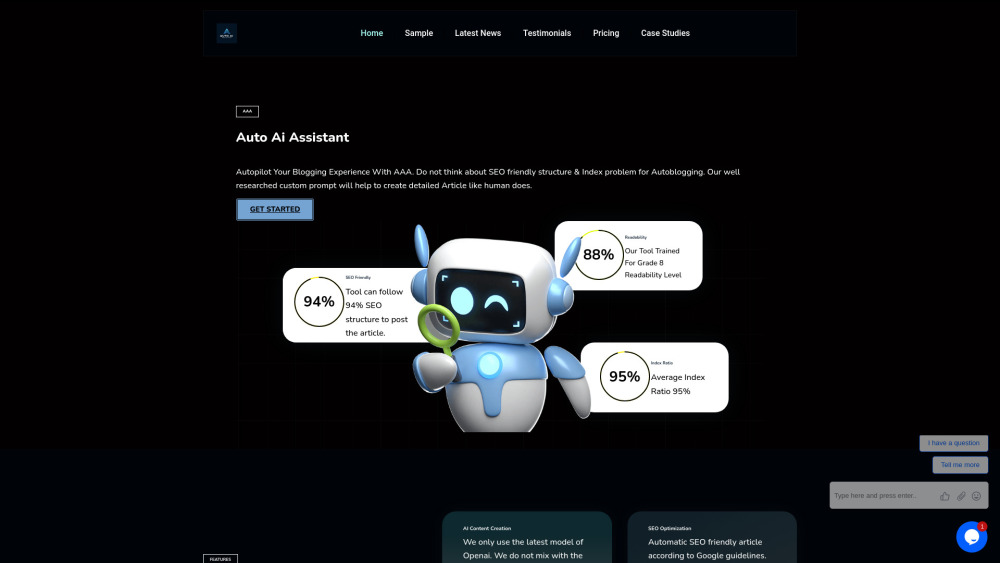
Auto Ai Assistant (AAA) is an intelligent auto-blogging solution that simplifies content creation using artificial intelligence. By harnessing the power of the GPT-40 model, it produces comprehensive, 94% SEO-optimized articles and publishes them directly to your WordPress site. This eliminates time-consuming tasks like manual writing, formatting, and SEO tuning while ensuring fresh, engaging, and discoverable content.
How to use Auto Ai Assistant?
Using Auto Ai Assistant requires no technical expertise. Enter your desired keyword or subject, and the AI will generate a fully structured, SEO-enhanced article. You can then choose to publish immediately or schedule multiple posts in advance—ideal for maintaining an active blog presence with minimal effort.
Does Auto Ai Assistant support bulk posts on WordPress?
Yes, Auto Ai Assistant enables both single and bulk article uploads to WordPress. With scheduling capabilities, users can automate entire content calendars, making it perfect for agencies, marketers, and bloggers managing multiple websites.
How does the tool ensure SEO-friendly article generation?
The platform uses the advanced GPT-40 model to produce content that adheres to 94% of standard SEO best practices, including keyword integration, heading structure, and meta-readiness. Articles also achieve an 88% readability score, ensuring they engage readers while ranking well on search engines.