Explore risky content detection tools through the product profiles below. Writing and content tools help draft, revise or condense text. Drafting new material, checking language and summarizing a source require different review steps.
✳
How to compare risky content detection tools
Compare support for source documents, style instructions, outlines and length limits. Check whether citations link to real material rather than merely looking like references.
Verify names, dates, quotations and factual claims against the original sources. Edit tone, remove repetition and make sure the text answers the intended reader’s question.
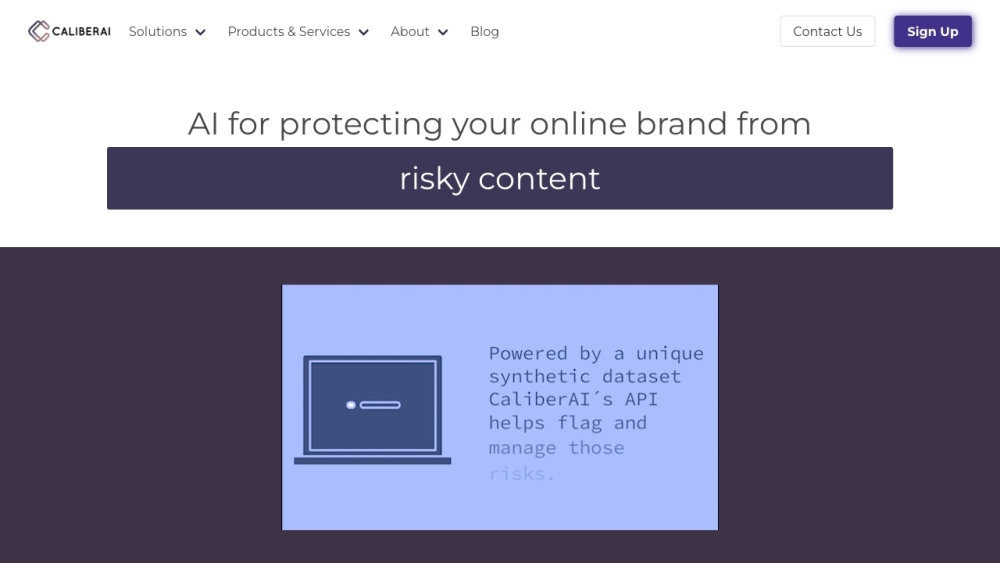
CaliberAI is an AI platform that specializes in fine-tuning LLMs to detect potentially risky content. It provides solutions for minimizing risk by protecting online brands from defamation, hate speech, doxxing, IP disclosure, and climate denial through its AI-powered tools.
FAQ
risky content detection questions and answers
Practical answers to help you take the next step.
What does the risky content detection tag cover?
Writing and content tools help draft, revise or condense text. Drafting new material, checking language and summarizing a source require different review steps.
Which inputs should I compare in risky content detection tools?
Compare support for source documents, style instructions, outlines and length limits. Check whether citations link to real material rather than merely looking like references.
How should I review results from a risky content detection tool?
Verify names, dates, quotations and factual claims against the original sources. Edit tone, remove repetition and make sure the text answers the intended reader’s question.
What is a fair first test for risky content detection tools?
Use a real brief and a short source document. Compare factual accuracy, structure and editing time rather than accepting the longest or most confident draft.
What does CaliberAI offer in this risky content detection collection?
CaliberAI is an AI platform that specializes in fine-tuning LLMs to detect potentially risky content. It provides solutions for minimizing risk by protecting online brands from defamation, hate speech, doxxing, IP disclosure, and climate denial through its AI-powered tools.
Which export details matter when choosing risky content detection tools?
Check export to plain text, Markdown, documents or your publishing system. Formatting, headings and working links matter when moving a draft into production.
How can I compare the cost of risky content detection tools?
Run the same small task in each shortlisted product. Compare the price per usable result, usage limits, regeneration costs and time spent correcting the output. Confirm current terms with the provider.
What should I check before sharing files with a risky content detection provider?
Check who can access uploaded material, how long it is retained and how deletion works. Use a non-confidential test file while evaluating a product.
Does every product tagged risky content detection solve the same problem?
No. The risky content detection label groups related applications, but each product description defines its actual scope. Compare the input and output for your specific task.
Where can I confirm a risky content detection product’s current features?
Open the product profile, follow its official website link and review its documentation or plan comparison. Directory descriptions and screenshots may predate product changes.