AI Code Generator

Refraction

Refraction: AI-powered code generation tool. Refactor, document, and test code effortlessly by pasting and selecting your preferred language or framework.

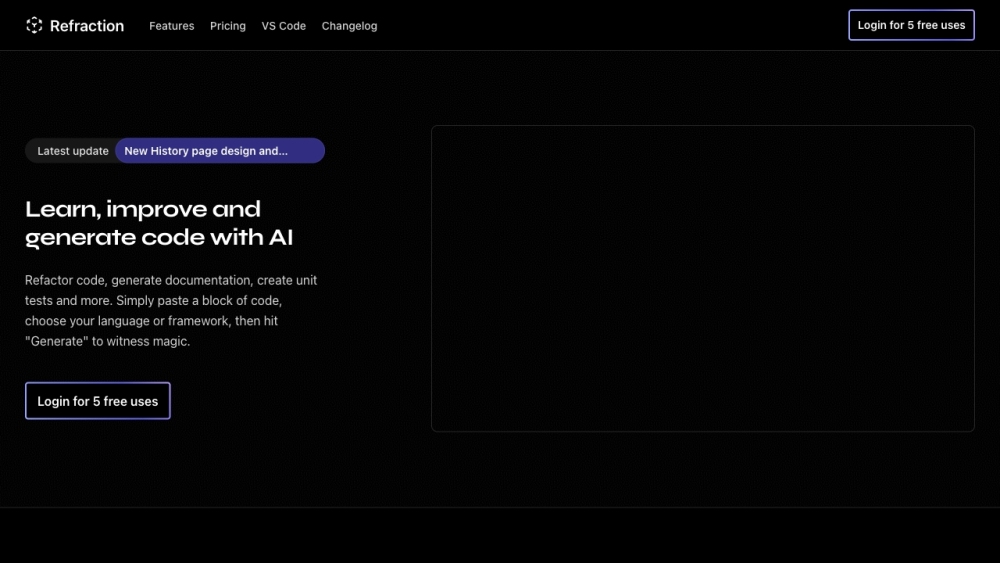
Refraction website preview

Refraction Website screenshot

Understanding Refraction

Refraction is an AI-driven code generation tool designed to streamline various software development tasks. It automates complex processes like code refactoring, unit test creation, and documentation generation. By simply inputting a block of code and selecting the desired language or framework, developers can save time and effort.

How to Operate Refraction

To get started with Refraction, adhere to these steps:

  1. Paste your code into the designated input area.
  2. Select the programming language or framework from the list provided.
  3. Click on 'Generate' to start the process.
  4. Review the resulting code, documentation, or unit tests generated by Refraction.

Key Features of Refraction

AI-based code refactoring

Intelligent code generation

Automated documentation creation

Effortless unit test creation

Supports over 50 programming languages

Seamless integration with various frameworks

Practical Applications of Refraction

Generating unit tests from existing code

Enhancing code readability and performance through refactoring

Rapid documentation generation for projects

Automating repetitive coding tasks

Accelerating the code development process

Common Questions about Refraction

What is Refraction?

Refraction is an AI-powered tool that aids developers by automating tasks like code refactoring, documentation generation, and unit test creation. It streamlines these processes by analyzing the code provided and producing the desired output based on user preferences.

How do you use Refraction?

To use Refraction, simply paste your code, choose the appropriate language or framework, and click 'Generate.' The tool will then produce the necessary code, documentation, or unit tests for your project.

How does Refraction function?

Refraction utilizes AI to understand and process the code you input. Based on this analysis, it refactors the code, generates documentation, or creates unit tests as per your needs.

Does Refraction support multiple programming languages?

Yes, Refraction supports over 50 programming languages, including popular ones like Python, Java, JavaScript, and C++. This broad support ensures that it meets the diverse needs of developers.

Is my code secure when using Refraction?

Absolutely. Refraction ensures that your code is handled securely, with stringent measures in place to protect your data from unauthorized access or sharing.

Can Refraction integrate with my development framework?

Yes, Refraction is compatible with various frameworks, allowing you to choose the one that best fits your project requirements.

Can Refraction export documentation in different formats?

Refraction offers documentation in developer-friendly formats and allows exporting to formats like Markdown or HTML, giving you flexibility in how you use the generated content.

Product source: Refraction official website. Check the provider for current plans, limits and availability.

FAQ

Refraction questions and answers

Product context and practical checks for evaluating Refraction.

What is Refraction used for?

Refraction: AI-powered code generation tool. Refactor, document, and test code effortlessly by pasting and selecting your preferred language or framework.

How do I get started with Refraction?

To get started with Refraction, adhere to these steps: Paste your code into the designated input area. Select the programming language or framework from the list provided. Click on 'Generate' to start the process. Review the resulting code, documentation, or unit tests generated by Refraction.

Which capabilities are described for Refraction?

AI-based code refactoringIntelligent code generationAutomated documentation creationEffortless unit test creationSupports over 50 programming languagesSeamless integration with various frameworks

What projects can I evaluate Refraction for?

Generating unit tests from existing codeEnhancing code readability and performance through refactoringRapid documentation generation for projectsAutomating repetitive coding tasksAccelerating the code development process

What should I compare before choosing a Refraction plan?

Check Refraction’s current pricing page for included usage, renewal terms and any credit charges. Compare the cost of a usable result, including retries, rather than assuming that account registration includes free usage.

What inputs should I prepare for a Refraction trial?

Compare repository access, context limits, supported languages and tool permissions. Check whether the assistant can read relevant files and run your existing checks.

How can I check the quality of a Refraction result?

Review the diff, run tests and inspect error handling and dependency changes. Generated code should meet the same review standard as a human contribution.

Which export options should I check in Refraction?

Prefer changes you can inspect and keep in version control. Check whether code, tests and configuration can be exported without depending on a hosted preview.

What is a practical way to test Refraction against alternatives?

Choose a small reproducible bug with an existing failing check. Measure whether the tool fixes the cause, preserves behavior and produces a reviewable change.

Where is the official Refraction website?

The website linked from this profile is . Use the provider’s own documentation, account area and support channels to confirm current product details.