Writing Assistants

Embedditor.ai

Embedditor is an open-source MS Word equivalent for embedding that maximizes the effectiveness of vector searches. It offers a user-friendly interface for improving embedding metadata and tokens. With advanced NLP cleansing techniques, like TF-IDF normalization, users can enhance the efficiency and accuracy of their LLM-related applications. Embedditor also optimizes the relevance of content obtained from a vector database by intelligently splitting or merging the content based on its structure and adding void or hidden tokens. Furthermore, it provides secure data control by allowing local deployment on a PC or in a dedicated enterprise cloud or on-premises environment. By filtering out irrelevant tokens, users can save up to 40% on embedding and vector storage costs while achieving better search results.

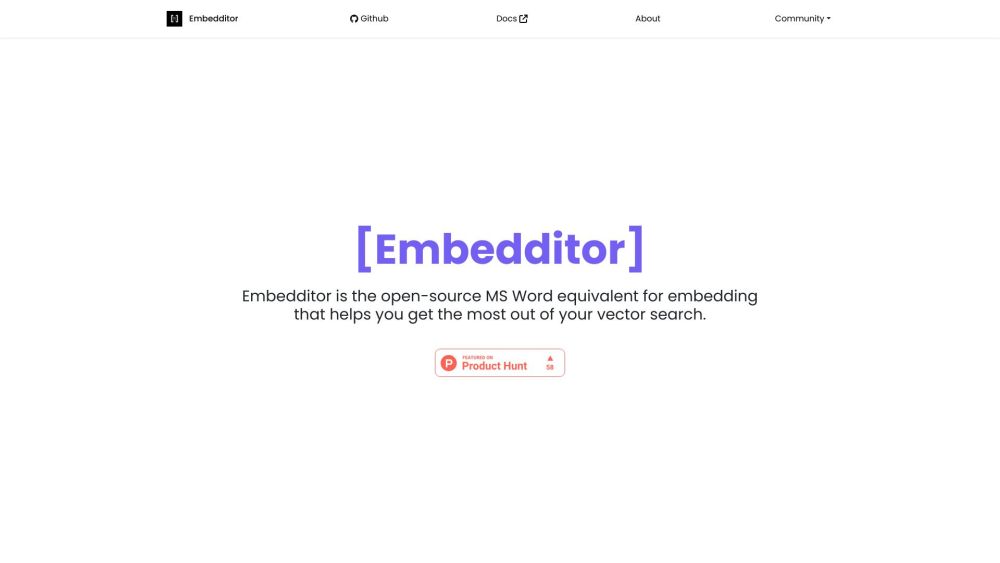
Embedditor.ai website preview

Embedditor.ai Website screenshot

What is Embedditor.ai?

Embedditor.ai is an open-source tool designed to enhance the effectiveness of vector searches, akin to an advanced MS Word for embedding. It features a user-friendly interface that allows users to refine embedding metadata and tokens efficiently. By leveraging sophisticated NLP cleansing techniques such as TF-IDF normalization, Embedditor.ai boosts the performance and accuracy of applications reliant on large language models (LLMs). Additionally, it optimizes content relevance from vector databases by intelligently managing content structure and introducing void or hidden tokens. Users can deploy Embedditor.ai locally, in an enterprise cloud, or on-premises, ensuring secure data control. The platform also offers significant cost savings, reducing embedding and vector storage expenses by up to 40% by eliminating irrelevant tokens.

How to Use Embedditor.ai?

1. Download and install the Docker image from the Embedditor GitHub repository.
2. Run the Docker image to launch Embedditor.ai.
3. Open a web browser to access the Embedditor.ai interface.
4. Utilize the interface to refine embedding metadata and tokens.
5. Apply advanced NLP cleansing techniques to enhance token quality.
6. Optimize content relevance from vector databases.
7. Utilize features for splitting or merging content based on its structure.
8. Add void or hidden tokens to improve semantic coherence.
9. Choose to deploy Embedditor.ai locally or in an enterprise cloud or on-premises.
10. Save costs by filtering out irrelevant tokens, thereby improving search results.

Core Features of Embedditor.ai

User-friendly interface for refining embedding metadata and tokens

Advanced NLP cleansing techniques like TF-IDF normalization

Content relevance optimization by managing content structure

Introduction of void or hidden tokens for better semantic coherence

Flexible deployment options: local, enterprise cloud, or on-premises

Cost savings through efficient token filtering and enhanced search results

Use Cases for Embedditor.ai

Enhancing the performance of LLM-related applications

Improving vector search outcomes

Increasing semantic coherence of content chunks

Ensuring data security and privacy

Product source: Embedditor.ai official website. Check the provider for current plans, limits and availability.

FAQ

Embedditor.ai questions and answers

Product context and practical checks for evaluating Embedditor.ai.

What is Embedditor.ai used for?

Embedditor is an open-source MS Word equivalent for embedding that maximizes the effectiveness of vector searches. It offers a user-friendly interface for improving embedding metadata and tokens. With advanced NLP cleansing techniques, like TF-IDF normalization, users can enhance the efficiency and accuracy of their LLM-related applications. Embedditor also optimizes the relevance of content obtained from a vector database by intelligently splitting or merging the content based on its structure and adding void or hidden tokens. Furthermore, it provides secure data control by allowing local deployment on a PC or in a dedicated enterprise cloud or on-premises environment. By filtering out irrelevant tokens, users can save up to 40% on embedding and vector storage costs while achieving better search results.

How do I get started with Embedditor.ai?

1. Download and install the Docker image from the Embedditor GitHub repository. 2. Run the Docker image to launch Embedditor.ai. 3. Open a web browser to access the Embedditor.ai interface. 4. Utilize the interface to refine embedding metadata and tokens. 5. Apply advanced NLP cleansing techniques to enhance token quality. 6. Optimize content relevance from vector databases. 7. Utilize features for splitting or merging content based on its structure. 8. Add void or hidden tokens to improve semantic coherence. 9. Choose to deploy Embedditor.ai locally or in an enterprise cloud or on-premises. 10. Save costs by filtering out irrelevant tokens, thereby improving search results.

Which capabilities are described for Embedditor.ai?

User-friendly interface for refining embedding metadata and tokensAdvanced NLP cleansing techniques like TF-IDF normalizationContent relevance optimization by managing content structureIntroduction of void or hidden tokens for better semantic coherenceFlexible deployment options: local, enterprise cloud, or on-premisesCost savings through efficient token filtering and enhanced search results

What projects can I evaluate Embedditor.ai for?

Enhancing the performance of LLM-related applicationsImproving vector search outcomesIncreasing semantic coherence of content chunksEnsuring data security and privacy Embedditor.ai Discord Join the Embedditor.ai community on Discord: https://discord.gg/7gF8dVv86E. For additional Discord details, click here(/discord/7gf8dvv86e). Embedditor.ai Company Embedditor.ai is developed by IngestAI Labs, Inc. Company address: 651 N Broad St, Middletown, DE, USA, 19709. Learn more about us at our about page (https://embedditor.ai/about). Embedditor.ai Twitter Follow us on Twitter: https://twitter.com/embedditor Embedditor.ai Github Access our code on GitHub: https://github.com/IngestAI/Embedditor

What should I compare before choosing a Embedditor.ai plan?

Check Embedditor.ai’s current pricing page for included usage, renewal terms and any credit charges. Compare the cost of a usable result, including retries, rather than assuming that account registration includes free usage.

What inputs should I prepare for a Embedditor.ai trial?

Compare support for source documents, style instructions, outlines and length limits. Check whether citations link to real material rather than merely looking like references.

How can I check the quality of a Embedditor.ai result?

Verify names, dates, quotations and factual claims against the original sources. Edit tone, remove repetition and make sure the text answers the intended reader’s question.

Which export options should I check in Embedditor.ai?

Check export to plain text, Markdown, documents or your publishing system. Formatting, headings and working links matter when moving a draft into production.

What is a practical way to test Embedditor.ai against alternatives?

Use a real brief and a short source document. Compare factual accuracy, structure and editing time rather than accepting the longest or most confident draft.

Where is the official Embedditor.ai website?

The website linked from this profile is https://embedditor.ai. Use the provider’s own documentation, account area and support channels to confirm current product details.

Visit Embedditor.ai