What is Archsense?
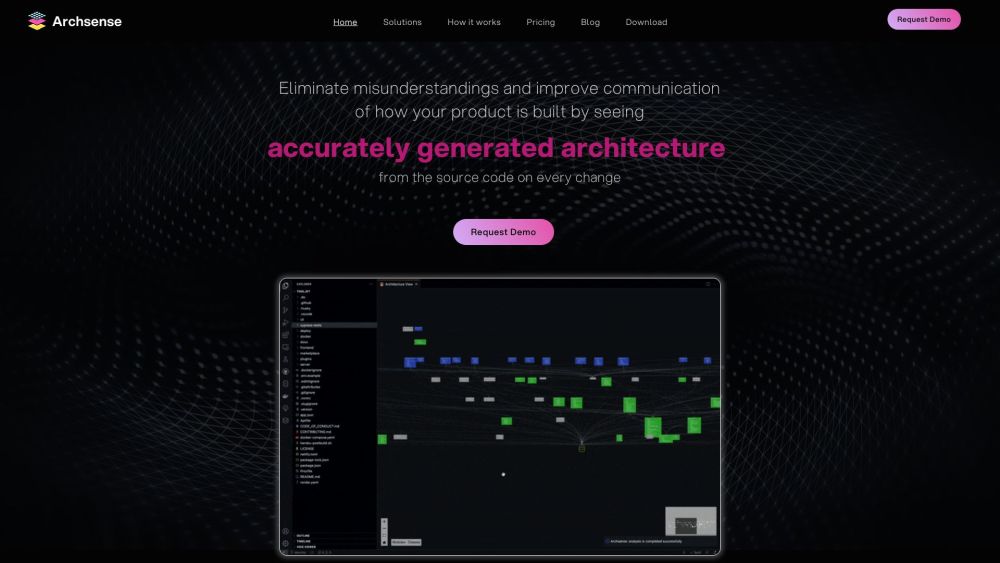
Archsense is an advanced tool for visualizing software architecture, ensuring accurate and current architecture models derived directly from your source code. It aids developers, project leaders, and architecture experts in gaining a thorough understanding of the system, thereby promoting teamwork and consensus among stakeholders.
How to use Archsense?
To leverage Archsense, integrate it with your Continuous Integration (CI) system. Archsense meticulously examines the codebase across multiple languages, constructing detailed architectural layers. This allows for collaborative planning of new features within the framework of the existing architecture, linking them to current services and soliciting feedback. Additionally, Archsense monitors progress by analyzing new code iterations, comparing them against proposed changes, and issuing alerts if significant deviations are detected.
Archsense's Core Features
The core features of Archsense include:
- Precise architectural representations generated from source code.
- Detection of code dependencies and event-based interactions across projects.
- Facilitates easy proposal and review processes for new changes within the existing architectural context.
- Provides immediate feedback on implementation progress and alerts for any detected issues.
Archsense's Use Cases
Archsense is beneficial in the following situations:
- Enhancing communication and preventing misunderstandings with accurate architecture visualizations.
- Addressing issues stemming from unforeseen code dependencies impacting other system components.
- Promoting collaboration and synchronization among project stakeholders.
- Ensuring implementations adhere to agreed-upon architectural plans and identifying deviations early.
Archsense Company
Company Name: Archsense, Inc.
Archsense Pricing
Pricing Details: https://www.archsense.dev/pricing
Archsense LinkedIn
LinkedIn Profile: https://www.linkedin.com/company/archsense
Archsense GitHub
GitHub Repository: https://github.com/ArchSense/archsense-mono